
In a time of uncertainty, we must continue to be creative, and courageous, enough to imagine alternatives. One of the most powerful ways to do that? Paying attention to the communities, movements, and ecosystems that are doing just that!
Here’s some good climate news to start 2026 with.
1. Europe Reaches a Clean Energy Tipping Point
For the first time, wind and photovoltaic panels (clean power) generated more electricity than fossil fuels in the European Union.
In 2025, wind and solar produced 30% of the EU’s electricity, overtaking coal, oil, and gas at 29%. Experts are calling this a major energy “tipping point” — not just symbolically, but structurally. It signals that renewables are no longer an alternative, but rather they are becoming the backbone of Europe’s energy system.
Additionally, Norway reached 97% electric vehicle sales, with EVs now outnumbering diesel cars on the road!
Source: The Guardian:Wind and solar overtook fossil fuels for EU power generation in 2025, report finds & Electrek: Norway reaches 97% EV sales as EVs now outnumber diesels on its roads
2. The High Seas Treaty Enters Into Force
After nearly two decades of negotiations, a landmark international agreement to protect ocean life beyond national borders has officially come into force.
Known as the Biodiversity Beyond National Jurisdiction (BBNJ) Agreement, this legally binding treaty covers the high seas, which are vast areas beyond national waters that make up over two-thirds of the ocean’s surface and more than 90% of Earth’s living space by volume.
For the first time, the global community now has a framework to establish marine protected areas and regulate human activity in these shared waters. It’s a major step toward ocean governance rooted in cooperation, which is a reminder that multilateralism can still deliver.
Source: UN: Game-changing international ocean treaty comes into force
3. An “Invisible” Climate Ally Gets the Spotlight
Evolutionary biologist Dr. Toby Kiers has been awarded the 2026 Tyler Prize for Environmental Achievement for her groundbreaking work on mycorrhizal fungi, which are vast underground networks that connect plant roots and soil ecosystems.
These fungi act as one of Earth’s circulatory systems, moving nutrients and carbon through the soil. According to Dr. Kiers, they are responsible for drawing down around 13 billion tons of CO₂ each year, which is roughly a third of global fossil fuel emissions.
Source: Euronews.:Scientist wins €215,000 award for work on carbon-sucking fungi
4. France Bans “Forever Chemicals”
This month, France officially implemented a ban on products containing PFAS. Often called “forever chemicals,” they were banned due to their extreme persistence in the environment.
The law prohibits the sale, production, or import of PFAS-containing products where safer alternatives already exist, including cosmetics, clothing, and ski wax. It also mandates expanded testing of drinking water and opens the door to holding polluters financially accountable.
PFAS have been linked to cancer, fertility issues, and immune system disruption. They have been found everywhere from Mount Everest to deep-sea wildlife.
5. Learning to Live With Water in Coastal Virginia
Hampton, a flood-prone coastal city is adopting a strategy inspired in part by the Netherlands. The model, known as Living With Water, emphasizes adaptation through restoring natural systems that absorb, buffer and cleanse water. “In practice, that means Hampton is trying to better handle large volumes of water, dotting flood-prone areas with plant-lined storage basins, inserting low weirs in rivers to slow the flow of excess water and raising some key streets that are likely to submerge regardless.”
They are also investing in rain gardens, plant-lined storage basins, restored marshes, raised roads, and even 3D-printed oyster reefs to slow water, absorb floods, and strengthen shorelines.
We love adaptation and mitigation in action.
6. After Disaster, Rural North Carolina Builds Energy Resilience
After Hurricane Helene devastated parts of rural North Carolina, some communities are finding ways to adapt. In Yancey County, the Double Island Volunteer Fire Department installed a solar-powered microgrid with battery storage. This creates a local resilience hub capable of operating during outages. The system reduces monthly energy costs, supports emergency response, and offers a model for energy autonomy in the face of future climate disasters.
Made possible through collaboration between nonprofits, government agencies, and community members, this is a great example of a climate-resilient project!
7. Collective action does not rest on the shoulders of a single individual.
It comes from all of us, across borders, disciplines, and ecosystems. Our collectivity, our imagination, and our compassion remain our greatest strengths. And as this month reminds us: the future is still being built and imagined, together.
Have a good climate story that you want to be featured? Reach out to us!
Support us!
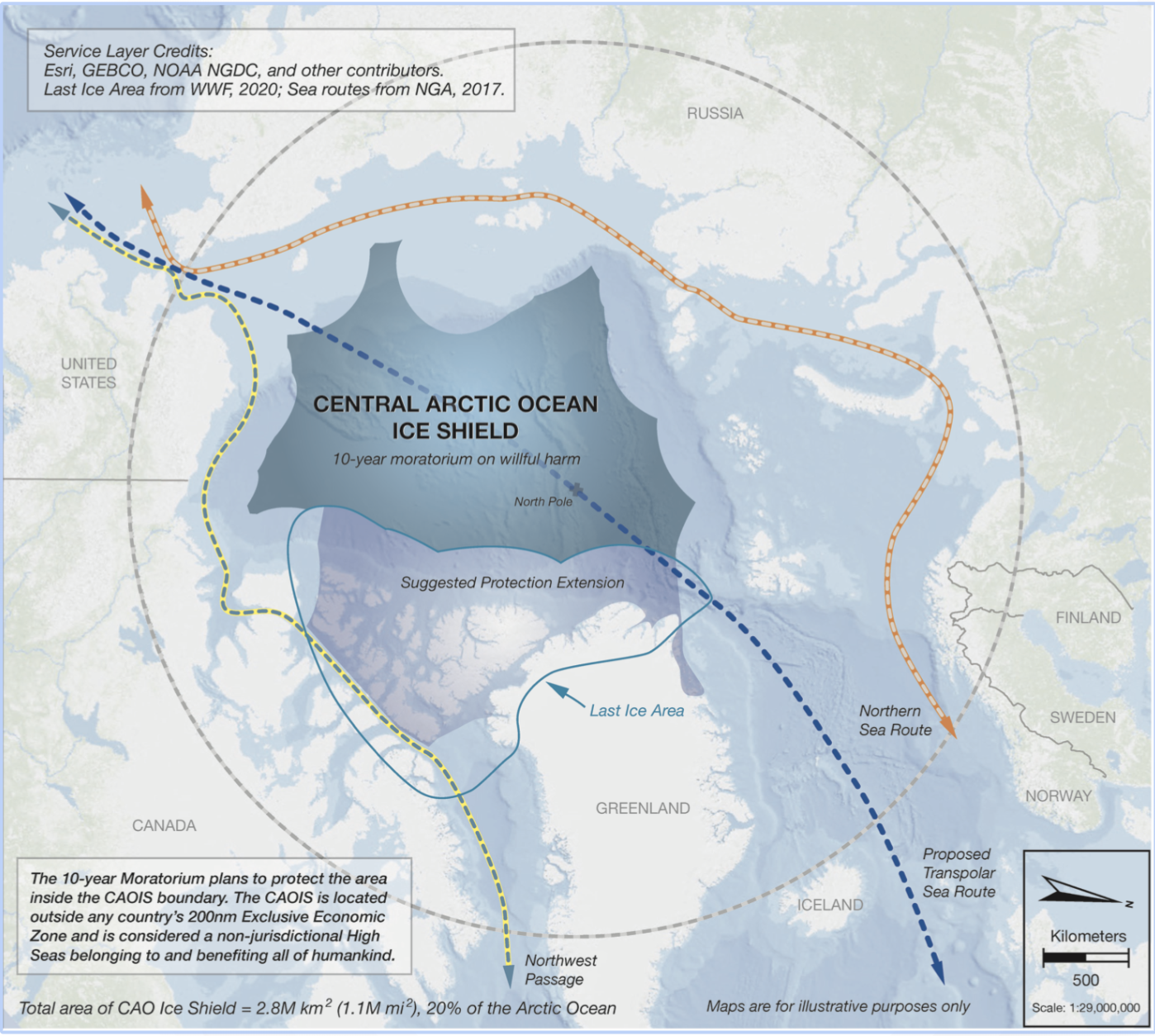
Through education, advocacy, and storytelling, we connect high-level science and policy to people everywhere. For seven years, we have worked tirelessly to advance a 10-Year Moratorium – A precautionary pause on exploitation of the Central Arctic Ocean Ice Shield.
Your support allows us to keep this momentum going:
- $15 → Produces one educational post to raise Arctic awareness
- $50 → Funds a detailed Arctic explainer or blog
- $250 → Supports multimedia storytelling on the Ice Crisis
Each contribution helps us continue to educate, inspire, and advocate for the world’s last frozen frontier. Support us here!