
From tracking melting ice caps to detecting illegal fishing in the Arctic, satellites provide the critical data that underpins global climate policy. They help ensure that decisions at forums like the UNFCCC COP are grounded in the best available science, protecting both people and the planet. Congestion in low Earth orbit, space debris, and geopolitical tensions put climate-monitoring satellites, and the data they collect, at risk.
Arctic Angel Lilliana Fan (@lilliana.heic) brings unique expertise at the intersection of space law and climate action. Her work, from developing an Arctic monitoring app to leading international research on legal gaps in space security, is helping ensure these vital tools remain safe, accessible, and used for the global good.
As Lilliana prepares to present new research on equitable access to space at the Young Scholars Conference this September, she reminds us the importance of climate monitoring through science and technology, and that satellites need to be protected in order for us to have access to this importance data.

What is the role of satellites in climate monitoring?
Satellites play a vital role in tracking climate change by collecting data on global temperatures, sea-level rise, melting of ice caps, deforestation and greenhouse gas emissions. Since the launch of the first weather satellite in 1959, they have been central in advancing climate research.
How does this support the UNFCCC Framework?
The data collected from satellites and other earth observation systems inform the work of the Subsidiary Body for Scientific and Technological Advice (SBSTA) under the UNFCCC. As a key advisory body, the SBSTA connects scientific findings to the policy discussions of the Conference of the Parties (COP), ensuring that decisions are grounded in the most up-to-date research and developments. This highlights the strategic importance of protecting climate-monitoring satellite infrastructure.
Current Challenges and recent developments:
Increasing congestion in the Low Earth Orbit (LEO) and growing geopolitical tensions poses risks to satellite-based climate monitoring. Activities such as anti-satellite weapon testing and the accumulation of space debris in outer space threaten global security and the usage of these critical satellite technologies

The Copernicus Earth Observation program by the European Union has recently launched Sentinel-5A, which is designed to monitor air pollution and atmospheric composition. This mission supports the implementation of the Paris Agreement by helping track progress on emissions reduction targets.
Monitoring the Arctic:
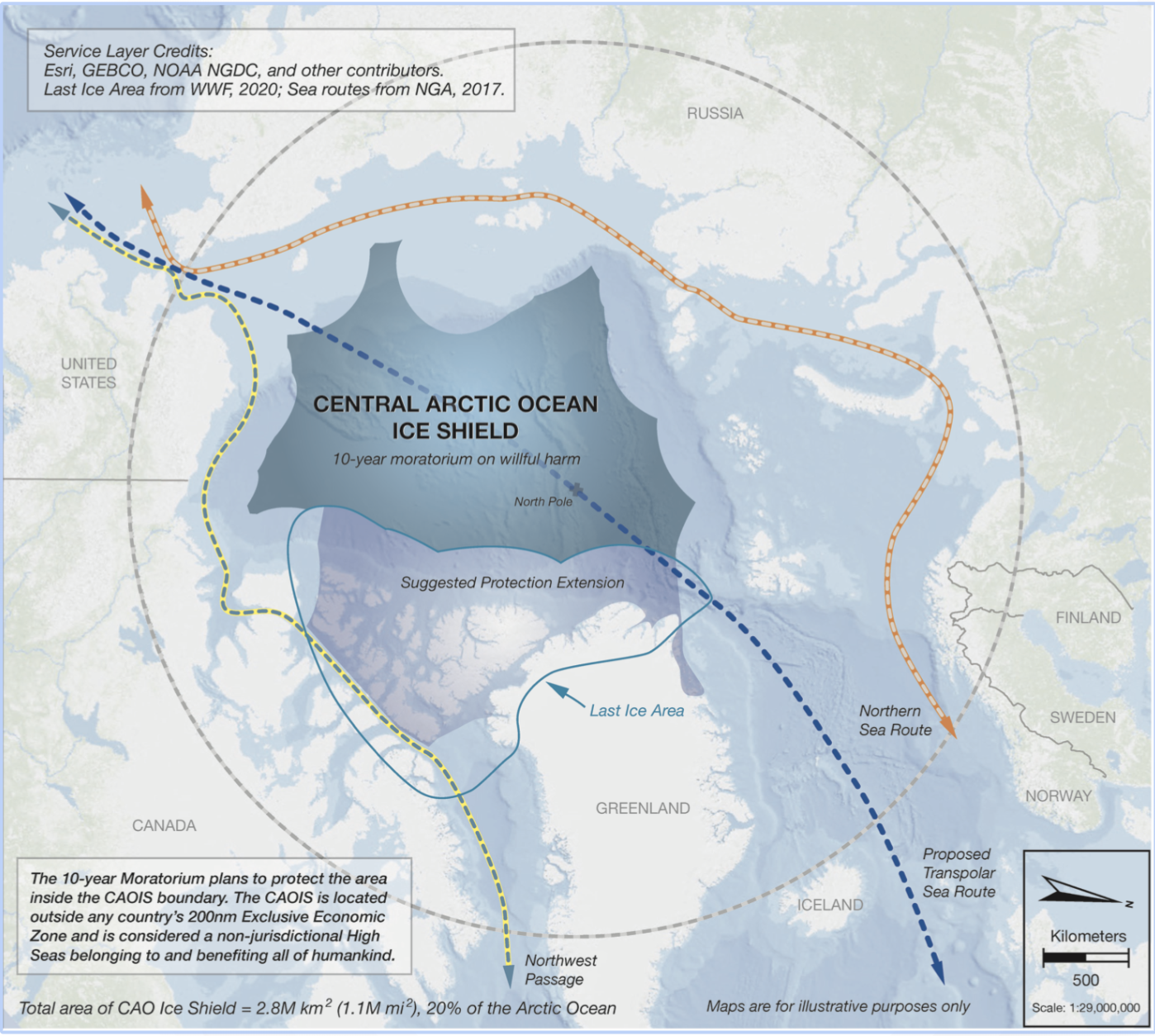
Satellite technology is especially crucial for arctic monitoring, as extreme weather conditions and inaccessibility hinder ground-based research. Polar-orbiting satellites provide consistent imaging, even though cloud cover and darkness. In addition to observing the melting of glaciers, satellites also monitor IUU (illegal, unreported and unregulated) fishing, an activity that threatens Arctic fish stocks and disrupts the livelihood of indigenous communities in the region.
Advocacy Work
Last year, I graduated from the European Space Agency’s Summer Course on Space Law and Policy. As part of the training, I conducted a project regarding Arctic monitoring and created an app prototype for the mission. Our team also examined the legal implications of sending a new polar satellite constellation for IUU fishing, emergency, vessel tracking and environmental monitoring.
Before that, I wrote a paper on refining liability in space law to hold actors accountable for damaging critical infrastructure like climate-monitoring satellites. It was presented at the 2024 International Young Scholars Conference for Space Law and will soon be published by the European Space Agency.
I am currently the research co-lead of the space law and policy project group at the Space Generation Advisory Council (SGAC), where I lead an international research team in closing legal gaps in space security. This year, I am honored to have the opportunity to represent SGAC at the United Nations Committee on the Peaceful Uses of Outer Space (UN COPUOS), monitoring debates and negotiations closely helped us strengthen our legal advocacy.
As Climate Justice cannot be achieved with Social Justice, I am deeply grateful to return as a panelist at the Young Scholars Conference for space law this September to present my newest research on space appropriation – focusing on the need for fair and inclusive access to space for developing countries.
Satellites give us the ability to monitor, and respond to, the climate crisis. Satellites and other critical Infrastructures for climate monitoring must be protected!